A Global Food Ingredients Leader's HubSpot Marketing Foundation: From SAP Sunset to Global Scale
- Industry: Manufacturing
- Company Size: Entreprise (10,000+ employees, $5B revenue)
- Services: Marketing Hub Implementation, SAP C4C x HubSpot Integration, Data Migration
Summary
This global food ingredients company overcame a forced platform migration and fragmented marketing operations to gain a unified marketing foundation connected to their existing SAP ecosystem. Now equipped with automated segmentation, integrated customer data, and scalable templates, they are positioned to roll out consistent marketing operations across 100+ countries.
The challenge
When Global Reach Creates Marketing Complexity
SAP Marketing Cloud Reaching End of Life
With SAP announcing the sunset of Marketing Cloud in 2026, the company faced a deadline. They needed a new marketing platform that local teams across dozens of markets could adopt without extensive retraining.
Decentralized Tools Limiting Visibility
Each local marketing team operated with different tools and platforms. This created data silos. Global headquarters had no consolidated view of campaign performance or customer engagement across markets.
Manual Processes Slowing Campaign Execution
Email marketing required manual list management. No automated follow-ups existed. The team had no click-through rate tracking to measure engagement. Building segmented lists took significant time and effort.
Beyond a Simple Platform Replacement
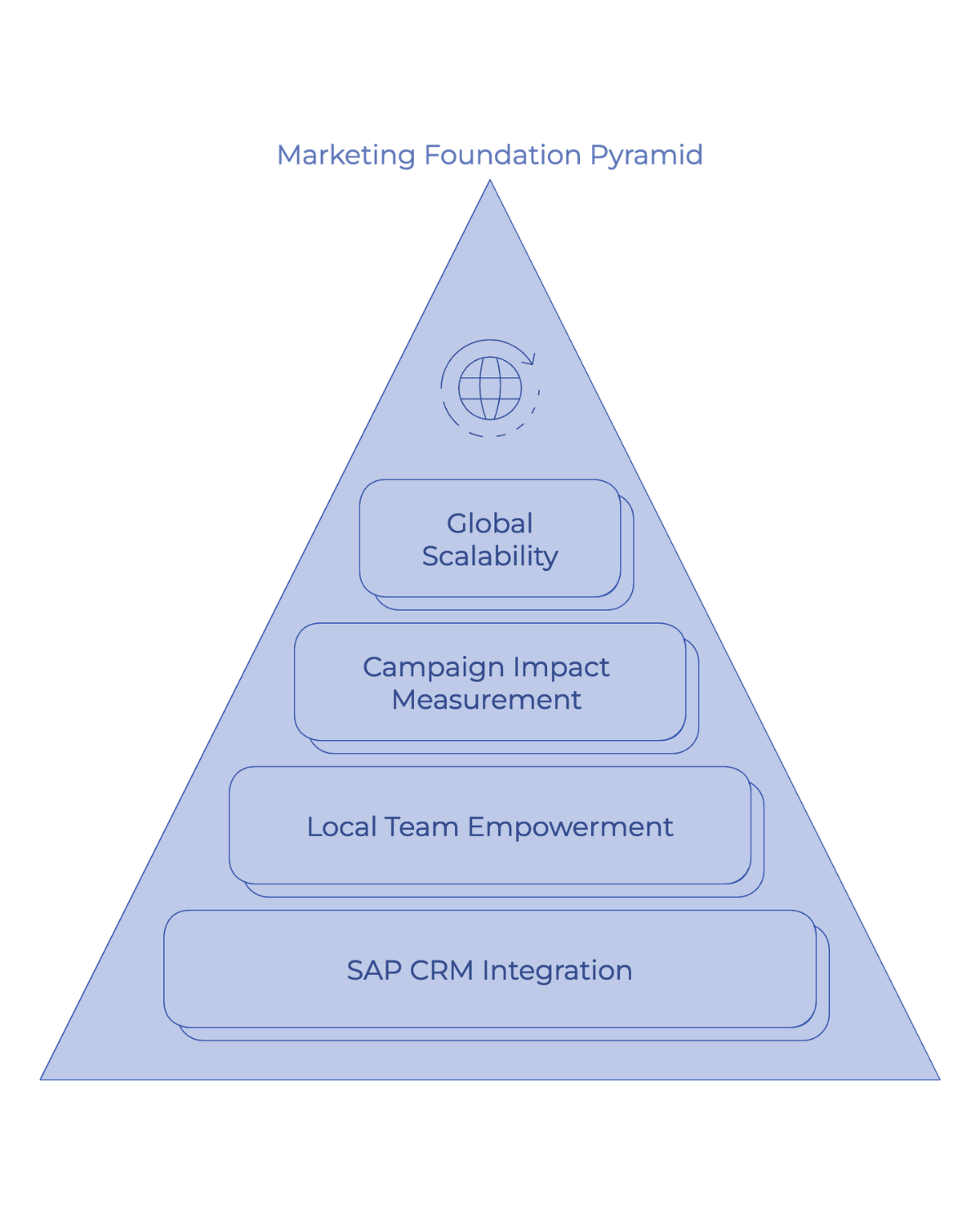
This company needed more than a new email tool to replace SAP Marketing Cloud. They required a marketing foundation that would:
-
Connect directly to their SAP CRM for real-time customer and order data
-
Enable local teams to execute campaigns without technical dependencies
-
Provide clear measurement of campaign impact on actual purchasing behavior
-
Scale from a single market pilot to global deployment with consistent processes

HubSpot Marketing Hub with SAP CRM Integration

1. Assessment and Pilot Design
We started with the BELUX market as the MVP. This approach let us validate the integration architecture and campaign workflows before committing to a global rollout. We mapped their existing processes, identified the critical data flows from SAP CRM, and designed templates that local teams could use independently.
2. SAP CRM Integration and Data Migration
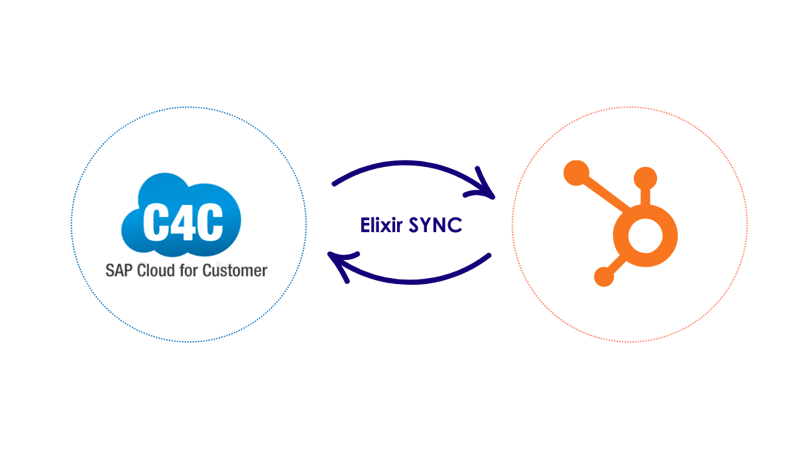
Elixir supported the integration to replicate contacts, companies, and order data from SAP C4C into HubSpot. This included both the initial historical load and ongoing synchronization. The order history data became the foundation for purchase-based segmentation, allowing the team to identify active buyers of specific product lines for cross-selling campaigns.
3. Marketing Hub Configuration
We configured Marketing Hub Enterprise with email templates, workflow automations, and reporting dashboards. The focus was on creating reusable assets. Every template and workflow was designed with global rollout in mind so that other markets could adopt them with minimal customization.
4. Team Enablement
We ran onboarding sessions with the BeLux team, combining technical setup support with hands-on campaign creation. The pilot campaign focused on cross-selling, targeting buyers of one product line with complementary offerings.
Purchase-Based Segmentation for Cross-Selling
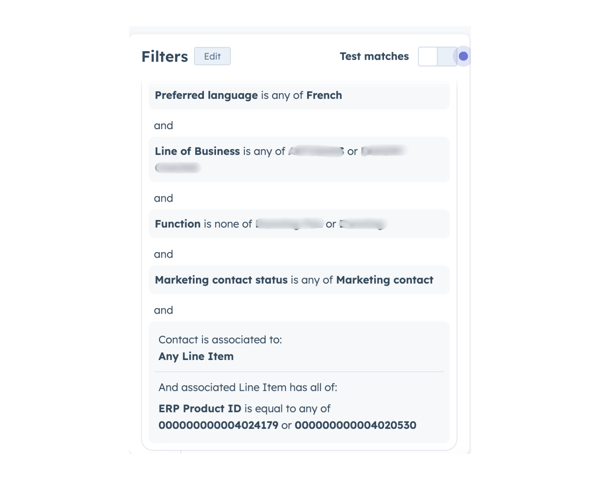
The integration went beyond basic contact synchronization. By bringing order history from SAP into HubSpot, we enabled a new capability: segmentation based on actual purchasing behavior.
1. Active Buyer Identification: The team builds lists of customers who purchased specific products within defined timeframes, without manual data exports or IT requests.
2. Cross-Sell Targeting: By analyzing which products complement each other, marketing runs campaigns to existing customers most likely to benefit from additional product lines.
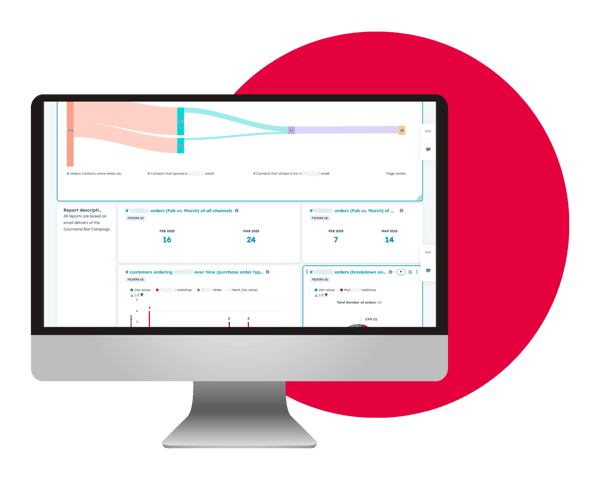
3. Campaign Attribution: Custom dashboards show not only who engaged with a campaign, but also connect that engagement back to the customer's purchase profile.
This means marketing decisions are grounded in real commercial data, not assumptions. For a company operating across 100+ countries with complex distributor networks, this capability turns HubSpot into a commercial intelligence tool, not a send-and-hope email platform.
The Result
The company now operates HubSpot Marketing Hub Enterprise integrated with their SAP CRM. The Belgium team has full autonomy to retrieve customer data, build segments based on purchase behavior, and measure campaign impact. This implementation serves as the blueprint for global expansion.
What Success Looks Like
Marketing Autonomy
Before: Segmented lists required time-consuming manual processes. Marketing depended on IT or external support to access customer data for targeting.
After: The marketing team retrieves data and builds segments independently in HubSpot, based on purchase history, engagement, and custom criteria.
Campaign Visibility
Before: No ability to measure campaign impact. Limited tracking of email engagement. No connection between marketing activity and commercial outcomes.
After: Clear dashboards showing campaign performance, engagement metrics, and the ability to tie marketing efforts to customer purchasing patterns.
Foundation for Global Scale
Before: Each local market used different tools. No standardized processes. Rolling out a campaign across markets meant starting from scratch each time.
After: Predefined templates, workflows, and integration architecture ready to deploy in new markets. The Belgium pilot becomes the playbook for 100+ countries.
Read more customer reports:
Mondi's HubSpot x SAP C4C V2 Integration
Mondi shifted to self-service campaigns with SAP C4C V2, gaining full visibility and faster, aligned marketing and sales.
Bosch Rexroth overcame commercial department disconnection and gained unified customer visibility with HubSpot and SAP C4C integration.